The short answer
Yes. Light, juicy red wines often taste better slightly chilled. Cooling them can make the fruit feel brighter, the wine more refreshing and the alcohol less prominent. The aim is not to serve red wine ice-cold: start around 12–15°C, or put the bottle in the refrigerator for roughly 20–30 minutes before opening.
Fuller, more tannic reds usually need less chilling. If they become too cold, their aroma can feel muted and their tannins may seem firmer.
The quick take
- “Room temperature” for wine means a cool 15–18°C—not a 28°C Hong Kong room.
- Light-bodied, fruit-led, lower-tannin reds are the easiest styles to chill.
- Start with 20–30 minutes in the refrigerator.
- Serve around 12–15°C and let the wine warm naturally in the glass.
- Very cold wine can lose aroma and make tannins feel harder.
- When in doubt, serve a little cooler: warming a glass is easier than cooling it at the table.
“Room temperature” was never supposed to mean Hong Kong room temperature
The old advice to serve red wine at room temperature came from a world of cool European rooms and cellars—not subtropical apartments in September.
Wine & Spirit Education Trust describes the traditional room-temperature range for wine as approximately 15–18°C. Above 18°C, a red can lose freshness and its structure may begin to feel muddled. In a warm Hong Kong home, a bottle left on the counter can easily be several degrees above that range.
That is why a short spell in the fridge is not breaking a wine rule. It is often the easiest way to bring the bottle closer to the temperature the rule originally intended.

What temperature changes in the glass
Temperature changes how we perceive aroma, texture, sweetness, acidity and alcohol.
Cool a lively red slightly and its acidity can feel clearer, its fruit more precise and its alcohol less obvious. The wine may seem lighter and more energetic—exactly what you want beside pizza, char siu, spicy noodles or an evening that is still too humid.
But colder is not always better. If a red is served close to refrigerator temperature, its aromas may hide and its tannins can feel firmer or more drying. A structured Cabernet, Barolo or heavily oaked red may therefore seem severe if treated like a white wine.
The useful question is not “Can red wine go in the fridge?” It is “How much chill suits this red?”
Which red wines taste good chilled?
Look for style rather than a single grape name. The best candidates usually have several of these qualities:
- light to medium body;
- bright acidity;
- fresh red-fruit flavours;
- low to moderate tannin;
- little obvious new oak;
- moderate alcohol;
- carbonic or semi-carbonic maceration, which can emphasise juicy fruit and softness.
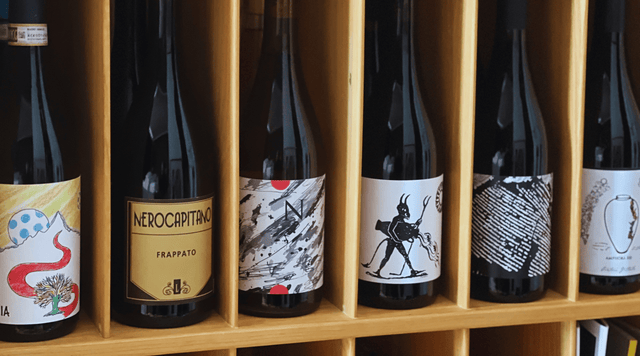
Pinot Noir, Gamay, Frappato and lighter expressions of Barbera, Grenache, Corvina or Cinsault can work well, but grape variety alone is not a guarantee. A delicate Pinot Noir and a concentrated, oaky Pinot Noir should not be served in exactly the same way.
When shopping, descriptions such as light-bodied, juicy, fresh, bright, low-tannin or carbonic are often more helpful than memorising regions.

Which reds should not be served very cold?
Full-bodied, highly tannic or heavily oaked wines normally show better at a slightly warmer temperature. Cooling them too far may suppress their aroma while making the tannin feel more forceful.
This does not mean they must sit in a hot room. A bold red that has reached 25°C will still benefit from gentle cooling toward approximately 16–18°C. It simply does not need the same chill as a light, crunchy red.
The easiest method: 20–30 minutes in the fridge
- Put the unopened bottle in the refrigerator for 20–30 minutes.
- Open it and pour a small glass.
- If it tastes fresh and aromatic, start drinking.
- If it feels closed or too firm, leave the bottle and glass out for five or ten minutes.
- If it still feels warm and alcoholic, give it another ten minutes in the fridge.
Your refrigerator, bottle starting temperature and room temperature will all affect the result, so treat the clock as a practical starting point—not laboratory precision.
Need it cold more quickly?
Place the bottle in a bucket filled with both ice and water. Water closes the air gaps around the bottle and transfers heat more efficiently than ice cubes alone. Turn the bottle gently every few minutes and taste rather than forgetting it for half an hour.
Accidentally made it too cold?
Do nothing dramatic. Pour a glass and wait. Wine warms surprisingly quickly once poured, particularly in Hong Kong weather. Holding the bowl of the glass briefly will speed things up, although it is better to let the temperature rise gradually.
Three chillable reds to try
These are not random red wines placed under a seasonal heading. Each has the freshness, fruit and structure that makes a light chill genuinely useful.
Tempesta — Terre di Pietra
A soft, floral and juicy Veneto red made from Corvina, Rondinella, Corvinone and Molinara. At 11.5% ABV, with fresh fruit and a gentle structure, it is an easy place to begin. Try it lightly chilled with pizza, cold cuts or a casual weeknight dinner.

Piccola Peste — Terre di Pietra
Light, punchy and bright, with red fruit and refreshing acidity. The producer’s Valpolicella blend is especially good slightly chilled and has enough energy for dishes with sweetness or spice—including kung pao chicken.

Trojan Horse 2023 — Cantina Martinelli
A carbonic, chillable red with raspberry, red cherry and soft spice. It stays juicy rather than heavy, making it a strong match for pizza, charcuterie or Sichuan dishes.

What to eat with chilled red wine in Hong Kong
Slightly chilled reds are useful at the table because they combine red-wine fruit with some of the refreshment we normally expect from white or rosé.
- Char siu and roast meats: juicy fruit works with caramelised edges, while freshness keeps the pairing from becoming heavy.
- Pizza and tomato pasta: acidity meets acidity, and moderate tannin does not overwhelm the meal.
- Spicy Sichuan or Thai dishes: lower alcohol and a cooler serving temperature can feel more comfortable than a warm, powerful red.
- Cold cuts and cheese: a classic home for light, savoury reds.
- Hot pot: chillable red works particularly well with mushrooms, pork, chicken and tomato-based broths.
Is “chillable red” the same as natural wine?
No. Chillable describes how a wine tastes and how it can be served; natural wine describes an approach to farming and winemaking.
Many natural winemakers produce bright, lightly extracted reds that happen to taste excellent chilled. But conventional producers can make chillable reds too, and not every natural red should be refrigerated heavily.
If you are new to the category, read our clear guide to what natural wine means. For more warm-weather vocabulary, see the Natural Wine Summer Glossary.
The rule that matters
Serving temperature is not a test of wine knowledge. It is a tool for making the bottle taste better.
Start cool, taste, and let the glass warm. If you prefer it five degrees colder than someone else does, nobody needs to call the wine police.
→ Explore The Earth Wine’s red wine collection
Frequently asked questions
Should red wine be refrigerated before serving?
Light-bodied red wine often benefits from 20–30 minutes in the refrigerator. Fuller reds may need only enough cooling to bring them below a warm room temperature.
What temperature should chilled red wine be?
A practical starting range is approximately 12–15°C for lighter reds. Medium- and full-bodied reds generally suit a warmer range closer to 15–18°C.
Can red wine become too cold?
Yes. Excessive chilling may mute aroma and make tannin feel firmer. Let the bottle or glass warm naturally and taste it again.
Can I put red wine in an ice bucket?
Yes. Use a mixture of ice and water, check it frequently and remove the bottle once it feels cool enough. This method works more quickly than using ice alone.
Should opened red wine go in the fridge?
Usually, yes. Recork the bottle and refrigerate it to slow oxidation. Take it out before drinking and allow it to return to a suitable serving temperature.
Sources and further reading
- Wine & Spirit Education Trust — Ideal serving temperatures and wine storage
- Wine & Spirit Education Trust — How temperature changes wine mouthfeel
- Wine & Spirit Education Trust — Understanding acidity in wine
Editorial note: Serving ranges are guidelines. Wine style, room temperature and personal preference all matter. Product availability and pricing should be checked again immediately before publishing.